
The comparison of CJC-1295 vs Ipamorelin is one of the most common topics in peptide research. Although these compounds are often discussed together, they interact with different biological pathways involved in growth hormone signaling.
Understanding the differences between CJC-1295 vs Ipamorelin helps researchers evaluate how each peptide functions and why they are frequently investigated as complementary compounds in endocrine research.
When discussing CJC-1295 vs Ipamorelin, it’s important to understand that these peptides belong to different functional classes.
CJC-1295 is a synthetic analogue of growth hormone-releasing hormone (GHRH). Researchers study it because it is designed to stimulate growth hormone release by interacting with GHRH receptors.
Current research focuses on:
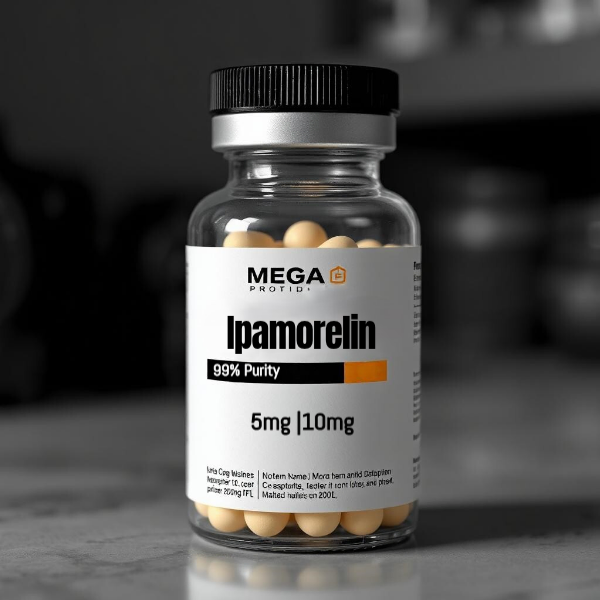
Ipamorelin is a selective growth hormone secretagogue. It works through the ghrelin receptor (GHSR), making it different from CJC-1295.
Researchers investigate Ipamorelin in relation to:
| Feature | CJC-1295 | Ipamorelin |
|---|---|---|
| Peptide Class | GHRH analogue | Growth hormone secretagogue |
| Primary Target | GHRH receptor | Ghrelin receptor (GHSR) |
| Main Research Area | Growth hormone signaling | Growth hormone signaling |
| Mechanism | GHRH pathway | Ghrelin pathway |
| Research Interest | Endocrine biology | Endocrine biology |
The most significant distinction in CJC-1295 vs Ipamorelin is receptor activity.
Targets growth hormone-releasing hormone receptors.
Targets ghrelin receptors (GHSR).
Because they activate different receptors, researchers often study them together to better understand hormone regulation.
Although both peptides influence growth hormone pathways, they do so through separate mechanisms.
Researchers study how CJC-1295 interacts with GHRH receptors to stimulate endogenous growth hormone release.
Ipamorelin activates ghrelin receptors, leading researchers to investigate its role in growth hormone signaling through a different biological pathway.
One reason CJC-1295 vs Ipamorelin is a popular comparison is that both compounds are used to study growth hormone regulation.
Researchers investigate:
Because the peptides target different receptors, researchers have explored how they may complement one another in experimental settings.
This combination is frequently discussed in scientific literature, although additional research is needed to understand all potential interactions.
Researchers use these peptides to investigate:
CJC-1295 and Ipamorelin have different molecular structures, allowing them to interact with distinct receptor systems.
These structural differences contribute to their unique mechanisms of action.
Scientific interest in CJC-1295 vs Ipamorelin continues to grow as researchers explore growth hormone physiology and peptide design.
Areas of ongoing research include:
Researchers also compare these peptides with:
Understanding these relationships helps place CJC-1295 and Ipamorelin within the broader field of peptide research.
Future studies may provide additional insight into:
Researchers continue evaluating these compounds as knowledge of peptide science advances.
No. CJC-1295 is a GHRH analogue, while Ipamorelin is a selective growth hormone secretagogue that primarily targets ghrelin receptors.
Because they influence growth hormone signaling through different receptor pathways.
CJC-1295 primarily interacts with growth hormone-releasing hormone receptors.
Ipamorelin primarily interacts with the ghrelin receptor (GHSR).
Researchers investigate growth hormone peptides to better understand endocrine signaling, hormone regulation, and receptor biology.

Always available!

Comes with each order!

Get access to expert resources.